Neurodiversity

Neurodiversity
Support for resident doctors with suspected or diagnosed neurodivergent conditions
TDWS offers support for resident doctors in training who experience problems with executive function, organisation, time management or procrastination that may or may not be related to neurodivergent traits and may be affecting their training or work.
You do not need a formal diagnosis to access support. Support is provided using a needs‑based approach, focusing on what will help you work and train effectively.
What is neurodiversity?
Everyone’s brain works differently. Neurodiversity describes the natural variation in how people think, learn, process information, and interact with the world.
- Neurotypical: brain functioning broadly fits what society considers “typical”
- Neurodivergent: brain functioning differs from this typical pattern
Everyone is different and has a unique combination of strengths and challenges. Sometimes these differences make life and work easy (photographic memory) other times they make life and work harder.
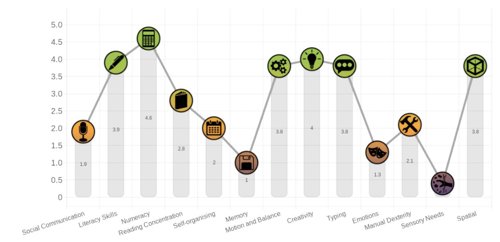
It can be helpful to have a think about yourself and break down what you are good at and what gets in your way. A spikey profile is a simple way to visualise these differences. The graphic below provides an example.
Examples of neurodivergent conditions
Commonly recognised neurodivergent conditions include:
-
Attention Deficit and Hyperactivity Disorder (ADHD)
-
Autism or Autistic Spectrum Condition (ASC)
-
Developmental Co‑ordination Disorder (DCD; previously known as dyspraxia)
-
Dyslexia
These conditions often co‑exist. Due to the increased mental load it takes to navigate a neurotypical world, and feelings of being different, many neurodivergent people suffer from low self-esteem and anxiety issues. Although people with neurodivergent conditions may not consider themselves disabled, people with (or suspected of having) these conditions are protected under the Equality Act 2010.
More information is available at:
What happens when you contact TDWS?
When you contact TDWS, we will arrange an initial supportive conversation to understand your current experiences and how these may be affecting your training. This helps us identify your needs and the most appropriate next steps. We will then work with you to consider what support may be helpful.


